
SICK Road Traffic Sensors and Detectors

Based on more than 40 years’ experience and with optical sensors in traffic, SICK’s solutions are designed for reliable operation even under severe weather conditions. An extremely wide range of robust and innovative products in transportation systems, combined with a worldwide service and sales structure have made SICK a market and technology leader in many fields of the traffic and environmental data acquisition.
The transport of goods and the movement of people is today optimised to a large degree using control and safety systems. Sensors for measuring different types of data form a substantial basis for a robust and long-lasting performance of such systems.
Our product range includes:
- Traffic data sensors and systems for vehicle classification, axle counting, overheight, and 3D vehicle profiling
- Traffic environment sensors and systems: tunnel, visual range measuring
- Vehicle hot spot detection
- Vehicle dangerous good detection system
Laser measurement sensors for getting vehicle contours
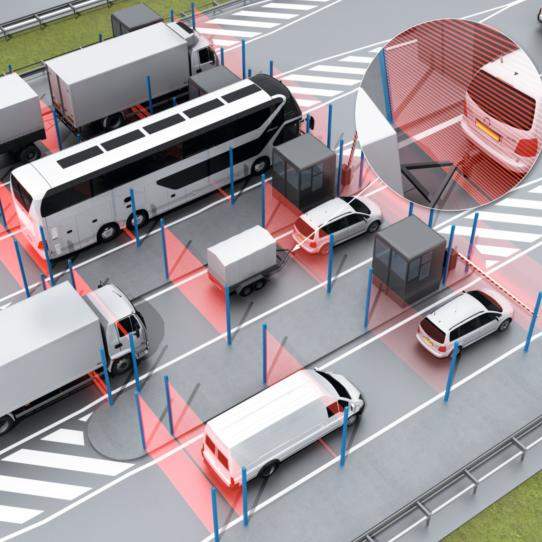
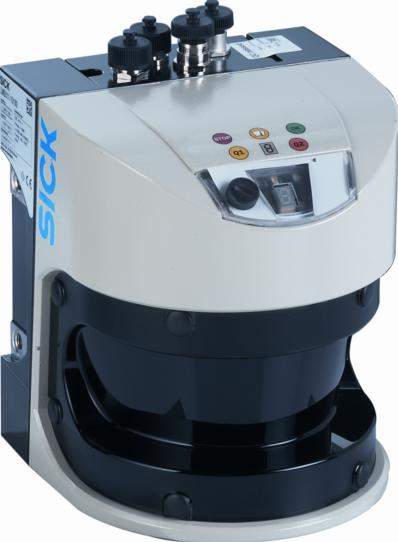
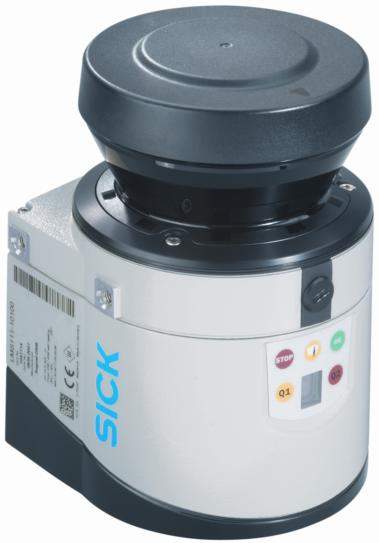
The LMS511 or LMS111 laser scanners provide 2D profile data of vehicle passing below for very precise vehicle classification and vehicle separation. Systems of several laser scanners mounted overhead on one gantry and synchronised allow for traffic data collection not only in single-lane applications like toll plazas but also in multi-lane-free-flow (MLFF) traffic.
The same laser scanners can also be used for red light and speed enforcement. Furthermore, laser scanners of this kind, could be used for monitoring dangerous areas at level crossings.
Laser measurement systems for vehicle classification
The Traffic Information Collector (TIC) is an integrated traffic measurement system that is based on SICK laser measurement technology, a technology that is used in thousands of traffic applications worldwide. The TIC102 AC Pro is especially designed for multi-lane, free-flow applications such as tolling enforcement and traffic management.
The proven TIC102 (traffic information collector) profiling system has been supplemented with an additional laser scanner for performing axle counting. The extended data record provides increased classification accuracy and reliably determines and outputs the number of axles. Axle counting works in free-flowing traffic and stop-and-go situations, day and night. All information can be accessed via a TCP interface or stored on the system and retrieved for post-processing via FTP. The graphical installation wizard and various self-tests allow easy and economical commissioning.
The system also functions in stop-and-go situations. Through a highly innovative configuration wizard that includes a live 3D view of the traffic, installation of a multi-lane gantry is quick and easy. The system autocalibrates in moving traffic and can be accessed remotely for maintenance.
A software trigger increases the detection rate and reading accuracy of third-party systems such as number plate recognition cameras and DSRC antennas. Additional information such as vehicle speed and dimension are transmitted over the TCP interface.
Light grids for vehicle classification and separation
The sunlight-proof XLG light curtains are used at toll stations on single lanes. The resolution (distance between two adjacent beams) is typically 30mm. Data from each beam is transmitted via serial interface. From this data, the vehicle class, front / rear end and the number of axles can be derived easily with high accuracy.
Vehicle dimensioning for detecting hazardous loads
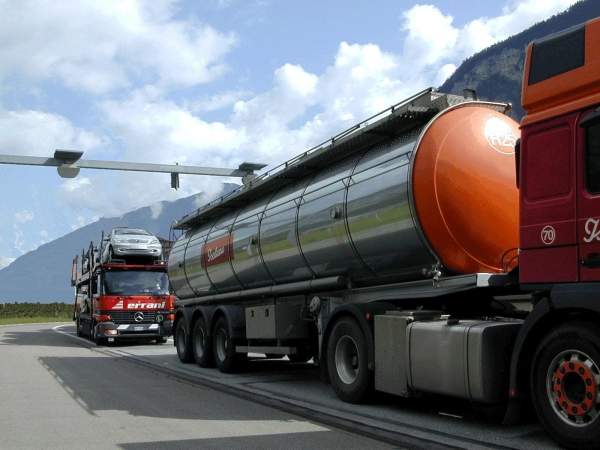
While a vehicle passes the profiler, the vehicle outside dimensions are measured with laser scanners. A three-dimensional model of the vehicle can be produced for further inspection. This allows the user to easily identify hazards such as load displacement and oversized loads and to take appropriate action.
After driving through the gantries and with the use of critical values, the measurement data is given out on the TCP interface. For safety on our roads and for the protection of traffic infrastructure, particularly in tunnels, the monitoring of vehicle external dimensions is becoming increasingly important.
Hot spot detection for more safety in tunnels
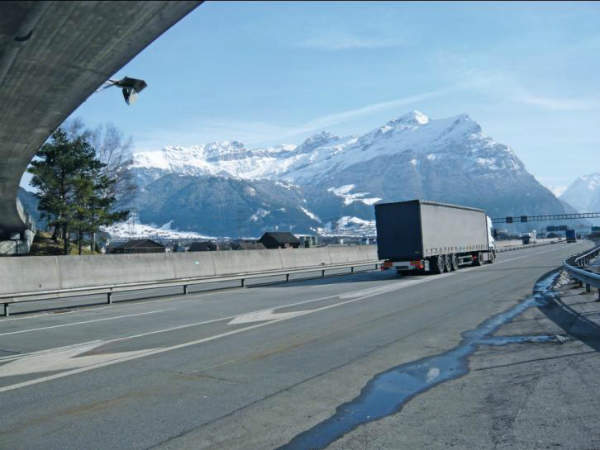
The Hot Spot Detector combines thermal imaging cameras and laser scanners to detect overheated vehicles. It is installed before critical road sections such as tunnels or ferry and train boarding areas. By identifying high risk vehicles the Hot Spot Detector enables road/rail operators to stop vehicles before they enter the critical area. For each vehicle a 3D model is generated and the vehicle class is determined automatically.
The infrared line cameras superimpose a temperature profile on the 3D information. This combination of 3D and thermal information enables the automatic identification of functional vehicle parts such as wheels, cabin or exhaust. The high frame rate enables free flow vehicle measurement with fully automated detection of hotspots at motorway speed.
Road tunnel sensors
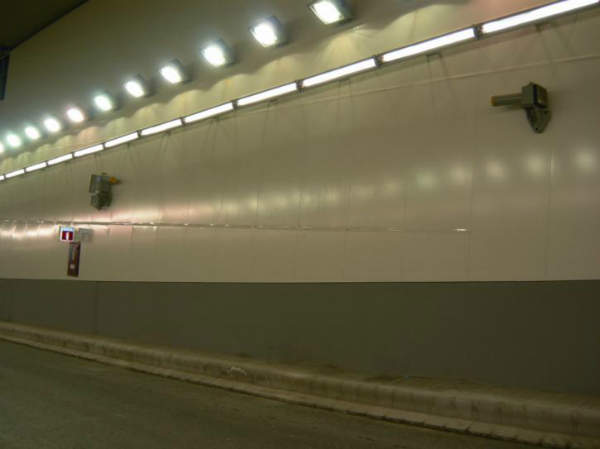
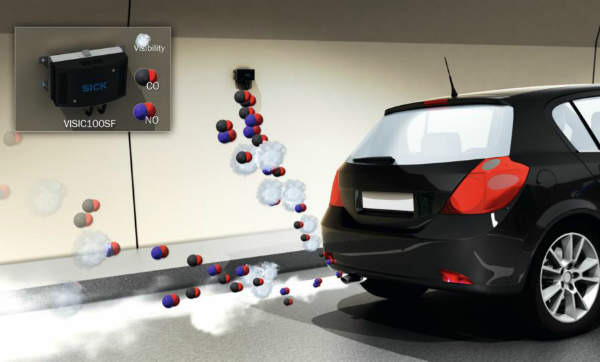
SICK is a market leader in tunnel sensors for controlling the ventilation in road tunnels. Today beside the k-value, used to indicate visibility in tunnels, in some cases the CO-concentration is still measured but more and more the NO2-concentration takes over the leading role for controlling the ventilation.
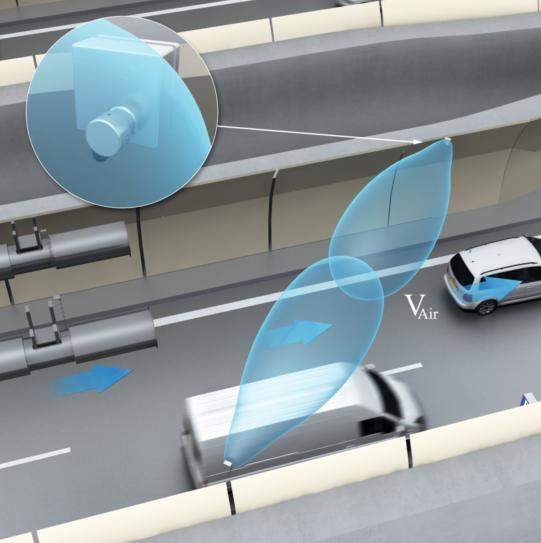
In case of fire an early and reliable smoke detection is essential and the air speed must be measured precisely. SICK’s product portfolio comprises all required components and technologies, which is unique when compared to all other suppliers for this market.
Make an enquiry
Erwin-Sick-Str. 1
79183 Waldkirch
Germany
SICK Images

Products and Services
LMS5xx
The LMS5xx laser measurement sensor is the successor of the widely used LMS2xx series. It offers a host of new features to boost performance in existing applications and break ground for new applications. The powerful multi-echo high-speed sampling technology provides dramatically improved reliability even in the worst weather conditions.
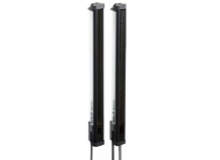
MLG-2 Pro
With the MLG-2 product family, SICK always offers the perfect solution for a variety of applications in the logistics automation and machine-building industries.
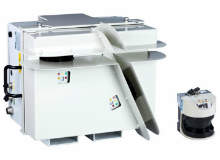
TIC Pro family
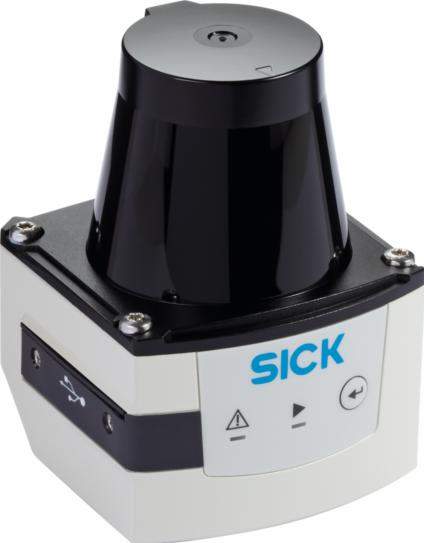
The name SICK is synonymous with innovation in terms of the development of laser scanners. The new multi-echo technology means that your measurement applications will continue to run perfectly, whatever the weather. It also increases the reliability and accuracy of the data being captured.
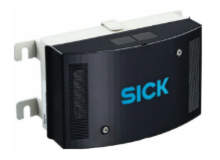
VISIC100SF
The VISIC100SF tunnel sensor is an all-in-one solution for measuring visibility, CO, and NO concentrations. It is the only product of its kind in the world to combine the scattered light measurement principle with electrochemical cells; all in one, compact housing.
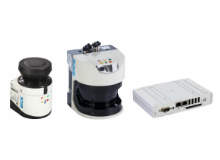
VPS Pro
The VPS Pro (Vehicle Profiling System) is designed for automatic measurement of vehicle dimensions using eye-safe laser scanners.

Related Projects
Press Release
Burning vehicles in tunnel tubes are among the horror scenarios in traffic reports. The Hot Spot Detector made by SICK features integrated LMS511 laser measurement sensors can detect overheated vehicles and vehicle components prior to entering the tunnel and send out a warning signal to the control center.
Read moreIn order to reduce distortions related to the current toll collection model in Brazil and, at the same time, offer the user a fairer, more modern and efficient system, the government of São Paulo State created the Point-to-Point programme, the first toll system in the country collected by kilometre actually travelled.
Read moreRugged, innovative and precise solutions in harsh environments modern traffic management on road, rail and sea routes is geared towards safety, efficiency and a good environmental balance. Rugged sensor solutions provide reliable control and monitoring systems for transportation applications. With solutions from SICK, customers rely on many years of experience indoors and outdoors.
Read moreRegional Offices
Erwin-Sick-Str. 1
79183 Waldkirch
Germany