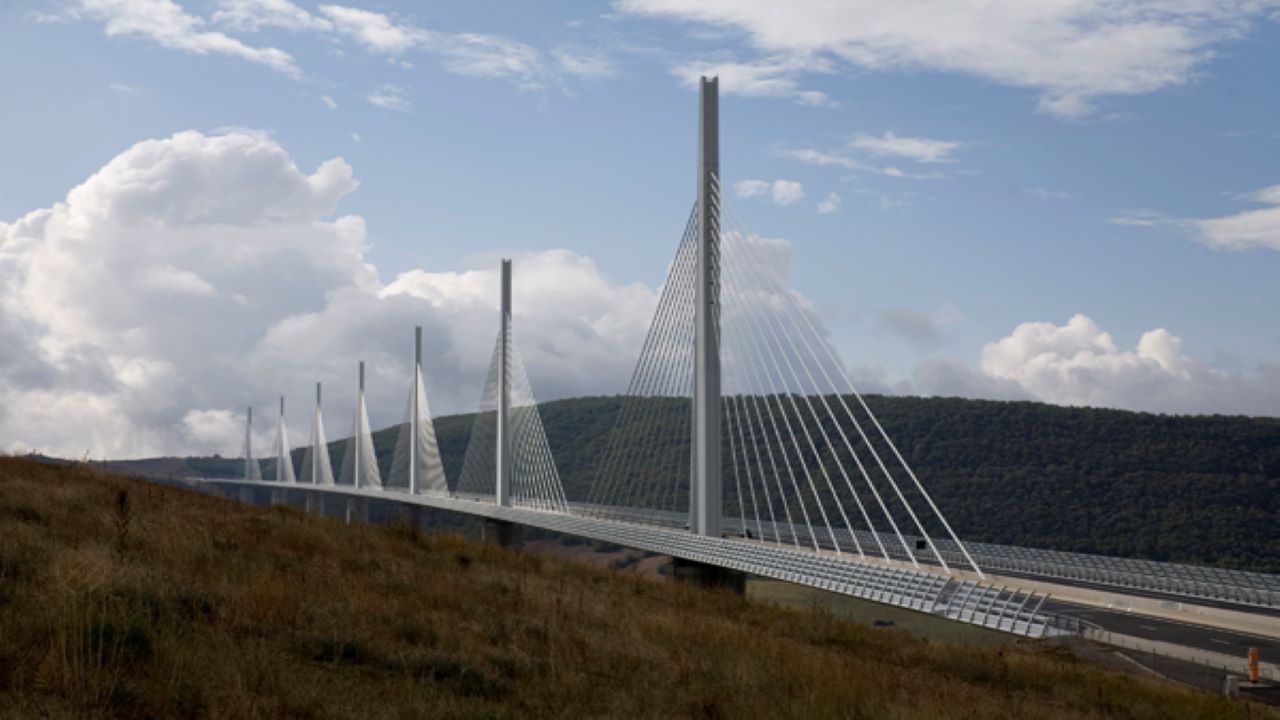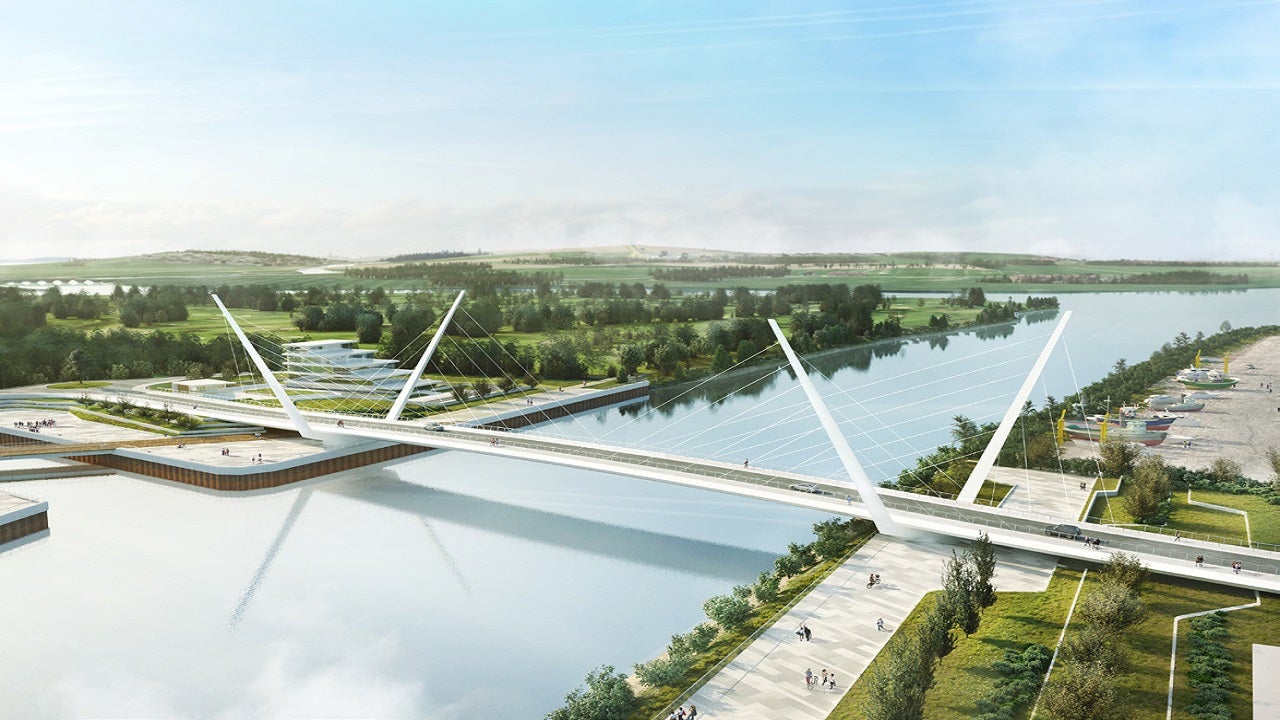

Sidney Lanier Cable-Stayed Bridge, Brunswick, GA, USAA new cable-stayed bridge has been built to replace the previous Sidney Lanier Bridge in Brunswick, Georgia, USA. The new bridge, which opened in 2003, is the longest spanning bridge in the state and allows larger ships to enter the port of Brunswick. EXISTING BRIDGEThe existing Sidney Lanier Bridge utilised a lift span system, meaning that as ships passed through, road traffic on the bridge came to a halt. With an average of 20 ships passing per day, the bridge was often closed. BRIDGE DESIGNThe new bridge was designed by DRC Consultants in New York City (later merged with T.Y. Lin of San Francisco). The towers are 486ft tall from the top of the footing to the top of the tower. The uprights are joined in two places by crossties, one below the cables and the other below the roadway. The tower is hollow and an elevator goes up to the upper crosstie. Ladders take inspectors above the crosstie for access to the anchorages for the cable stays. Ladders also extend from the roadway down to the bottom of the towers. The deck is continuous from one anchor pier to the other. The anchor pier is strong enough to support the deck, but also flexible enough to accommodate the large deflections that arise as temperature shifts change the length of the deck. The deck is supported by the cables and carries the enormous compression force that results from the angle of the cable stays. FORM TRAVELLERS The form travellers, originally fabricated in Europe, were assembled on the island below, one on the south and one on the north. When they began operations, each traveller was moved out from the tower one segment at a time. The primary purpose of the form traveller was to hold the wet concrete until it hardened into the proper shape. The form was then stripped from the hardened concrete. To achieve this, all surfaces of the form were able to move. Construction of the bridge was broken into three contracts. APPROACH SPANSRosiek Construction Company built the construction spans for $18.9 million. The approaches were designed by engineers of the Georgia DOT. They consist of low-level approaches of 120ft spans on two-column bents and high-level approaches of 180ft spans on a single column pier. The two spans before the main span and the low-level approaches of the south end of the bridge were let under the main span contract. MAIN SPANThe main span of the bridge was built by Recchi-GLF, a joint venture, for a cost of $65.5 million. It was designed by DRC Consultants in New York City (later merged with T.Y. Lin of San Francisco). The main span contract includeD part of the approach spans. The bridge is being paid for by the State of Georgia and the United States Coast Guard.
|
![]() Diagram of the Sidney Lanier bridge. | |
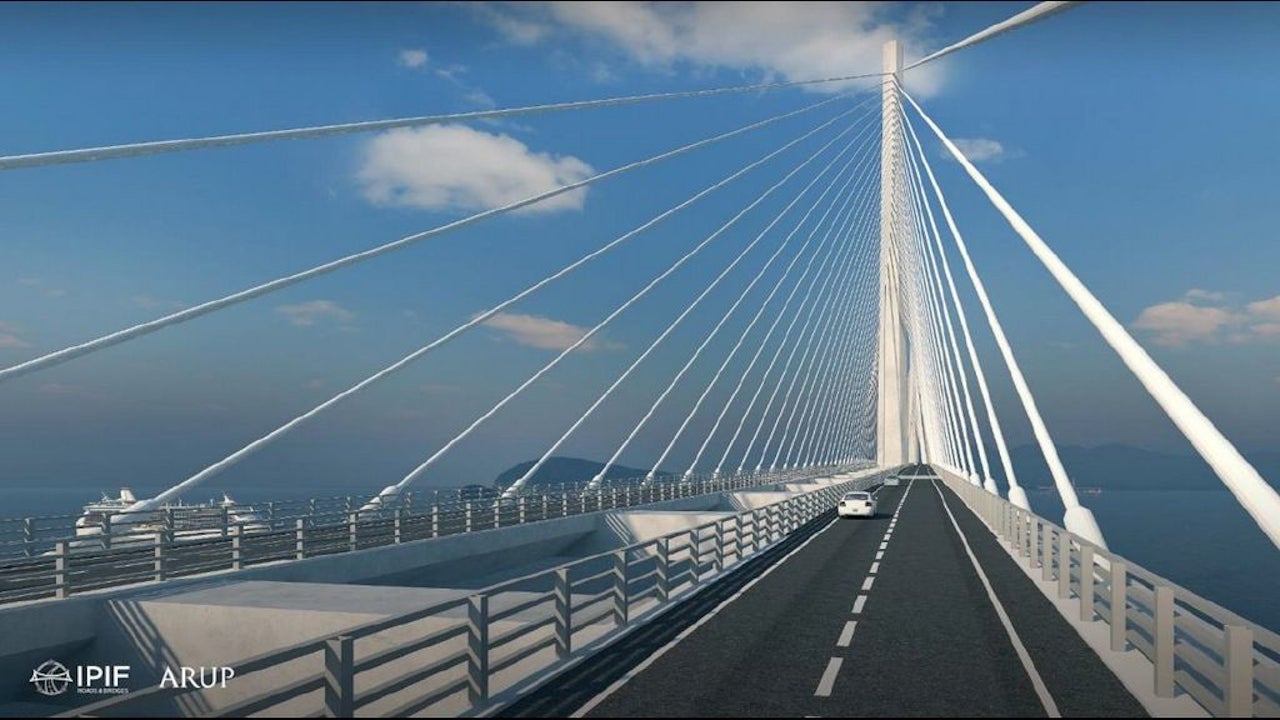
![]() The new Sidney Lanier Bridge is a cable-stayed bridge and is the longest in the State. | ||
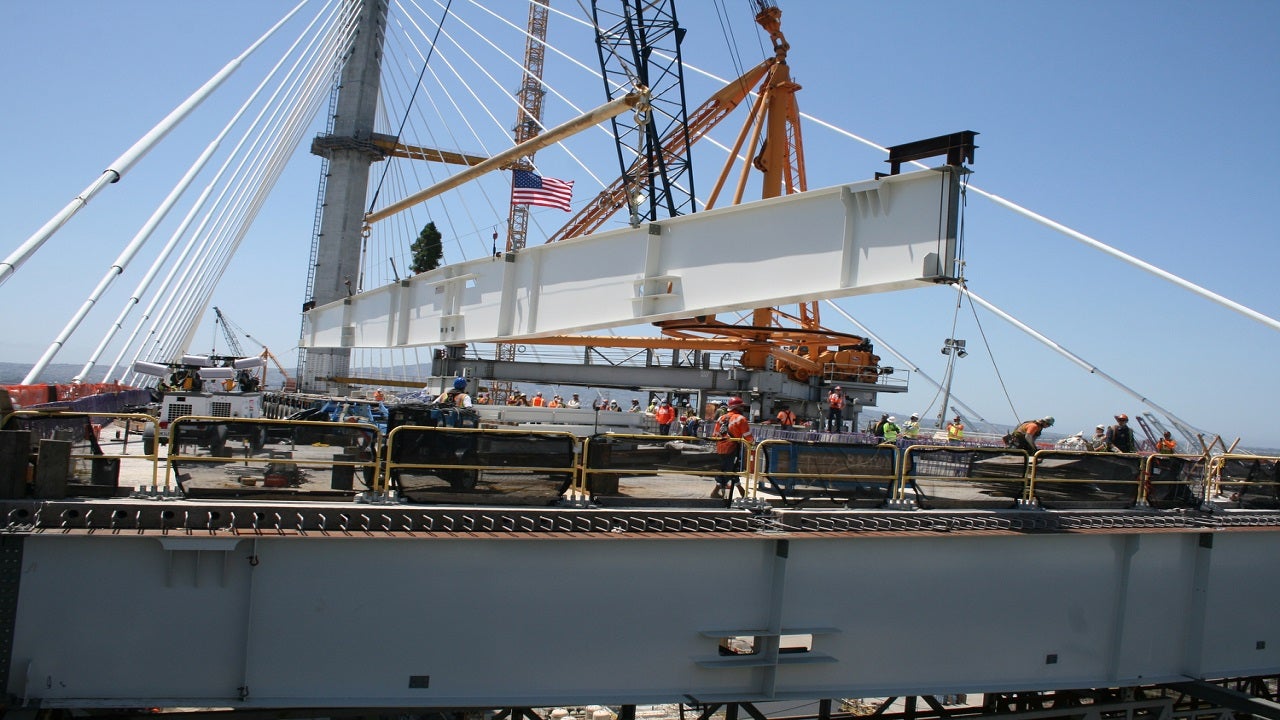
![]() The Sidney Lanier Bridge under construction (January 2000). | ||
![]() The southern approach of the Sidney Lanier Bridge. | ||
![]() Building the cofferdams for the Sidney Lanier Bridge. | ||
![]() Pouring the deck. |