
|
The 670km Egnatia Odos – which translates as Roman Road – motorway is one of the largest and most ambitious civil engineering projects in Europe at the current time. The motorway will run across Northern Greece from its starting-point at Igoumenitsa, across the Prefectures of Thesprotia, Ioannina, Grevena, Kozani, Imathia, Thessaloniki, Kavala, Xanthi, Rodopi and Evros, to the village of Kipi on the Turkish border. The road will be a key route in the developing trans-European road network and forms an integral part of European route E90. It follows (approximately) the route of the old Roman road, the Via Engatia. Designed to the specifications of the Trans-European Road network, it is a 24.5m-wide dual carriageway with two traffic lanes and an emergency lane in each direction. Nine major vertical axes connect the motorway with Albania, FYROM, Bulgaria and Turkey. The Egnatia Odos will be served by 720km of service roads. 50% of the Egnatia Odos's estimated €6.77bn cost will be spent on only 90km of the finished route: the bridges and tunnels. Over 1,700 structures will be dotted along the road, comprising 76 tunnels with a combined single bore length of 99km and 1,650 bridges with a combined length of 40km. "The Egnatia Odos motorway is one of the largest and most ambitious civil engineering projects to be found in Europe today."
On top of this, there will also be 43 river crossings, 11 railway crossings and 50 interchanges with existing roads. The whole project is divided into three sectors (western, central and eastern), with a construction manager and three international consultant companies overseeing the construction of each. The motorway is being constructed by a consortium called Egnatia Odos SA and will be a fully closed tolled offering. MOTORWAY CURRENTLY OPEN In the period from February 2000 to early 2006 480km of the motorway was opened. There are 165km of motorway sections still under construction. The final date for completion is in summer 2008 when the full route should be open to traffic. In the initial stages contractors included: (designer) Doxiadis Associates, (consulting engineer) ADK Aronis Drettas Karlaftis and contractors ADK Aronis Drettas Karlaftis, AEGEK, Empedos S.A and Themeliodomi SA. Egnatia Odos employs three Construction Managers (Thales-OMEK for Epirus, Parsons-Salfo for West Macedonia and Scetauroutes-ADO for Central and East Macedonia) and Kellogg-Brown & Root (KBR) as Project Management Consultants. There are seven sections still under construction including: Epirus 48km, Western Macedonia 31km, Central Macedonia 14km, and Eastern Macedonia and Thrace 72km. These final sections are being constructed under 19 contracts budgeted at €2.098bn. In addition, works are still underway on the vertical axes (Siatista–Kristalopigi, Thessaloniki–Serres–Promahonas, Thessaloniki–Moudania and Ardanio–Ormenio) and the cross border linkage under eight contracts budgeted at €511m. Contractors working on the final sections of the motorway include: Aktor A.T.E, Mechanikh A.E., Mesochoritis Bros ATE, Atti-Kat A.T.E, Klearhos G. Routsis AE, Alpine Mayreder Bau, Ionios A.E., Gantzoylas A.T.E, J&P Avax AE, Italimprese Societa' Consortile A Responsabilita' Limitata, Aegek ATE. HIGHWAY INTERSECTIONS AND LINKS The finished Egnatia Odos will form the backbone of the Northern Greece's transport system and will link the country to other Balkan countries (Albania, FYROM, Bulgaria and Turkey) through nine major vertical axes. It will also connect four of the country's major ports (Igoumenitsa, Volos, Thessaloniki, Kavala and Alexandroupoli) and six of its airports (Ioannina, Kastoria, Kozani, Thessaloniki, Kavala and Alexandroupoli). "49.5km of the entire Egnatia Odos will be underground in twin-bore tunnels."
As part of the European Intercontinental Transportation Network, the Egnatia Odos motorway will also be a collector route for the Balkan and south-eastern European transport system. Trans-European Corridors X (Berlin–Sofia–Thessalonika), IX (Helsinki–Alexandroupolis) and IV (Vienna–Belgrade–Thessalonika) all end at the Egnatia Road. TUNNELS ON THE EGNATIA ODOS MOTORWAY 49.5km of the entire Egnatia Odos will be underground in a total of 69 twin-bore tunnels, a necessity that is consuming 30% of the project's total cost. The majority of the tunnels will be bored with the rest (only 4.5%) constructed using the cut and cover method. Of the 76, only 15 are longer than 800m with the longest (the Driskos Twin-Bore Tunnel) measuring 4.7km. Arcadis constructed the 800m T8 tunnel. Most of the tunnels are located in Epirus and in Central and Western Macedonia where the road passes through the Pindus Mountains. However, there were geological problems and environmental concerns which required the route to be adjusted slightly. The tunnel design had to be redone and on the Grevena to Ioannian section there was a concern over the habitat of the endangered brown bear being destroyed. The Western Region has a total of 26.6km of road tunnels, the Central Region 19.6km and the Eastern Region 3.3km. The standard tunnel design, with a 120-year design life, being employed along the Egnatia Odos provides for two traffic lanes, each 3.75m wide with 1.25m pedestrian sidewalks and a maximum clearance of 5m. Underground emergency parking and turn-around points vary according to the length of the tunnel and the anticipated traffic volume but virtually all tunnels will feature cross passages between the eastbound and westbound tunnel bores every 350m and emergency vehicle cross passages and parking areas every 1,000m in case of a fire or other emergency. Reinforced concrete provides the final tunnel lining which is separated from the rock by a drainage system that will keep the tunnels dry. Costs for the tunnel construction depend on the geological conditions. This ranges from $8,000 a metre in good conditions to $32,000 a metre in poor conditions and the average cost for the smaller tunnels is $11,000 a metre. Advanced air-quality sensing and ventilation systems have been installed both to monitor and maintain general air quality and extract smoke in the event of a fire. The highway-wide telematics system is also present within the tunnels to ensure their safe and economic operation. There are sophisticated electronic surveillance measures, SCADA controls for the lighting, fire detection and tunnel ventilation systems and also advanced vehicle collision absorption measures in the tunnels. "The finished Egnatia Odos will form the backbone of the Northern Greece's transport system."
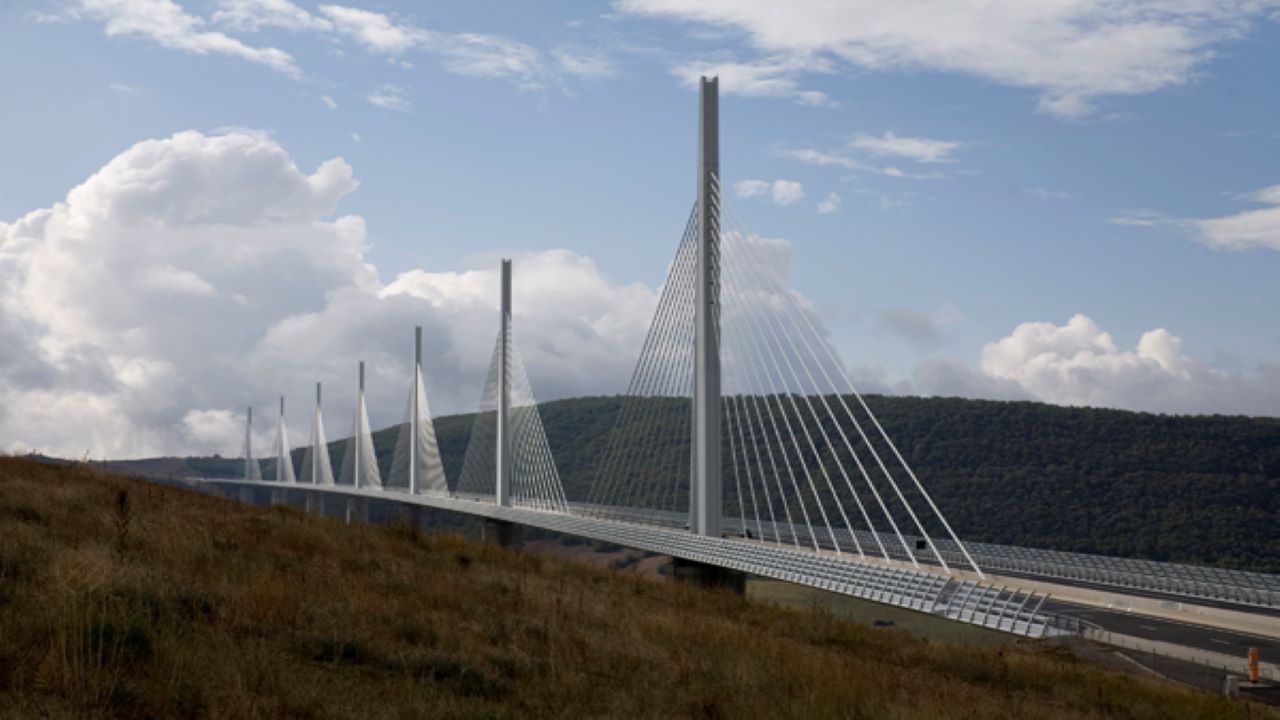
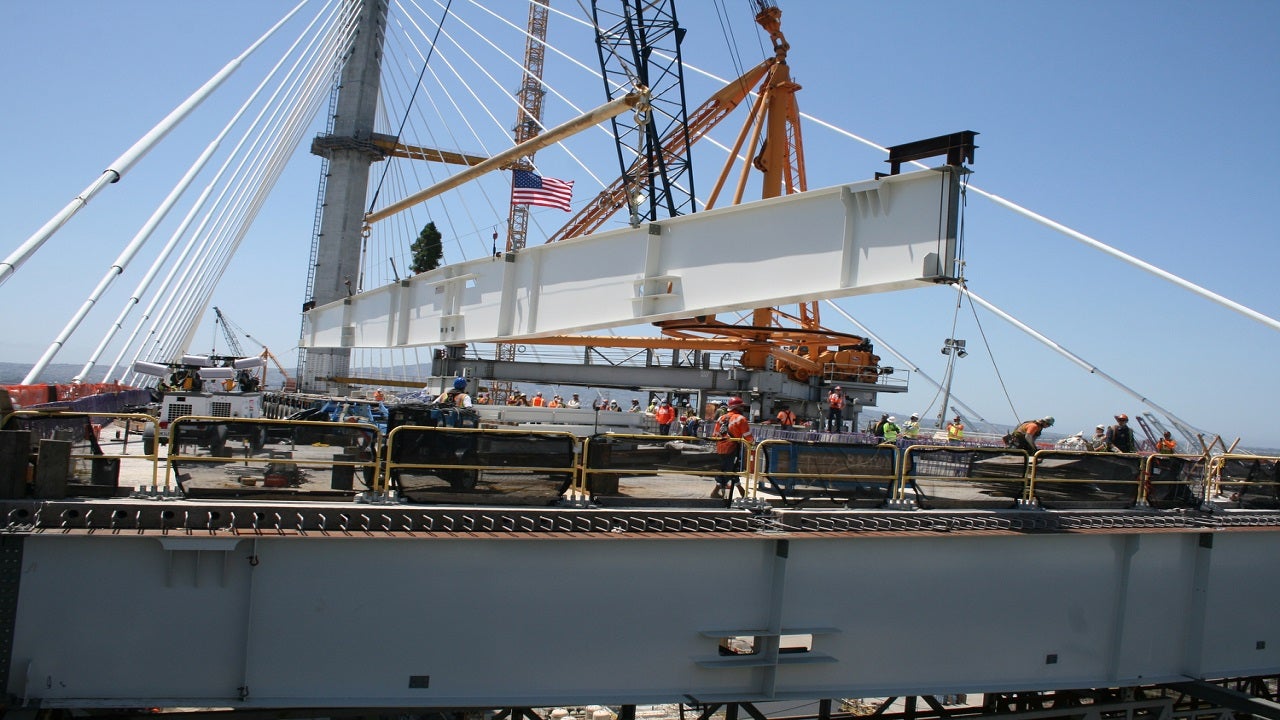
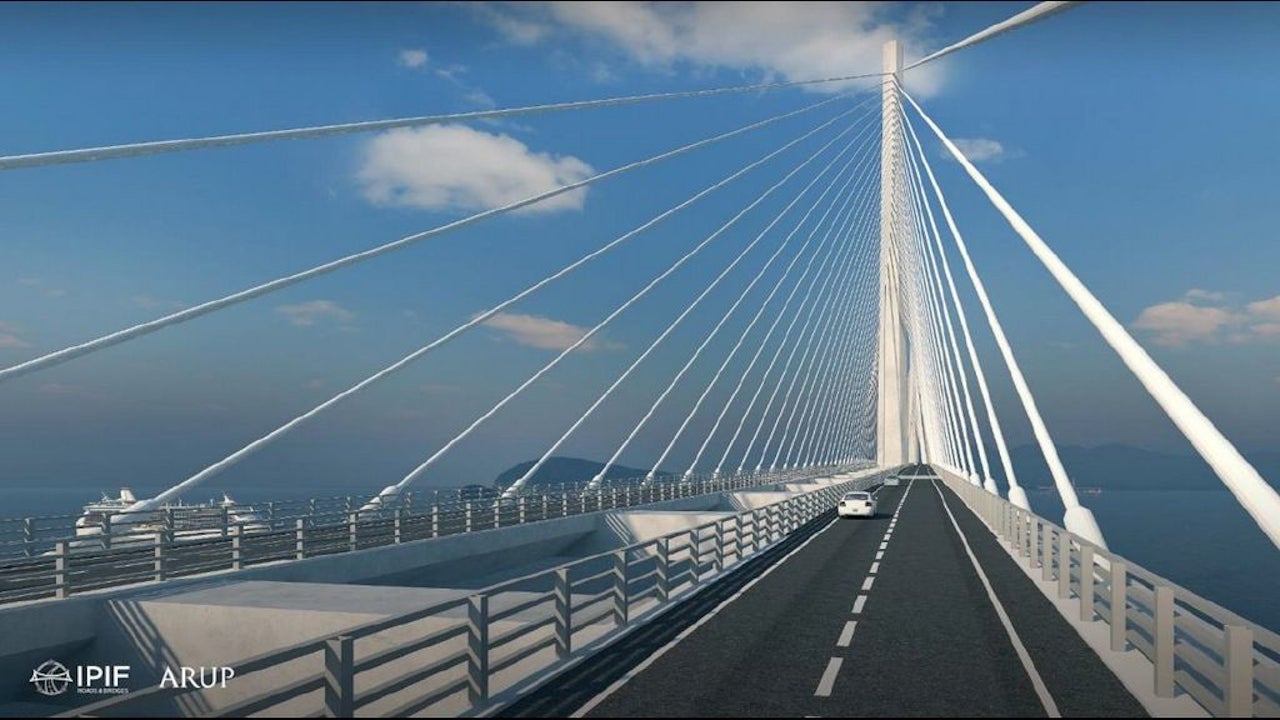
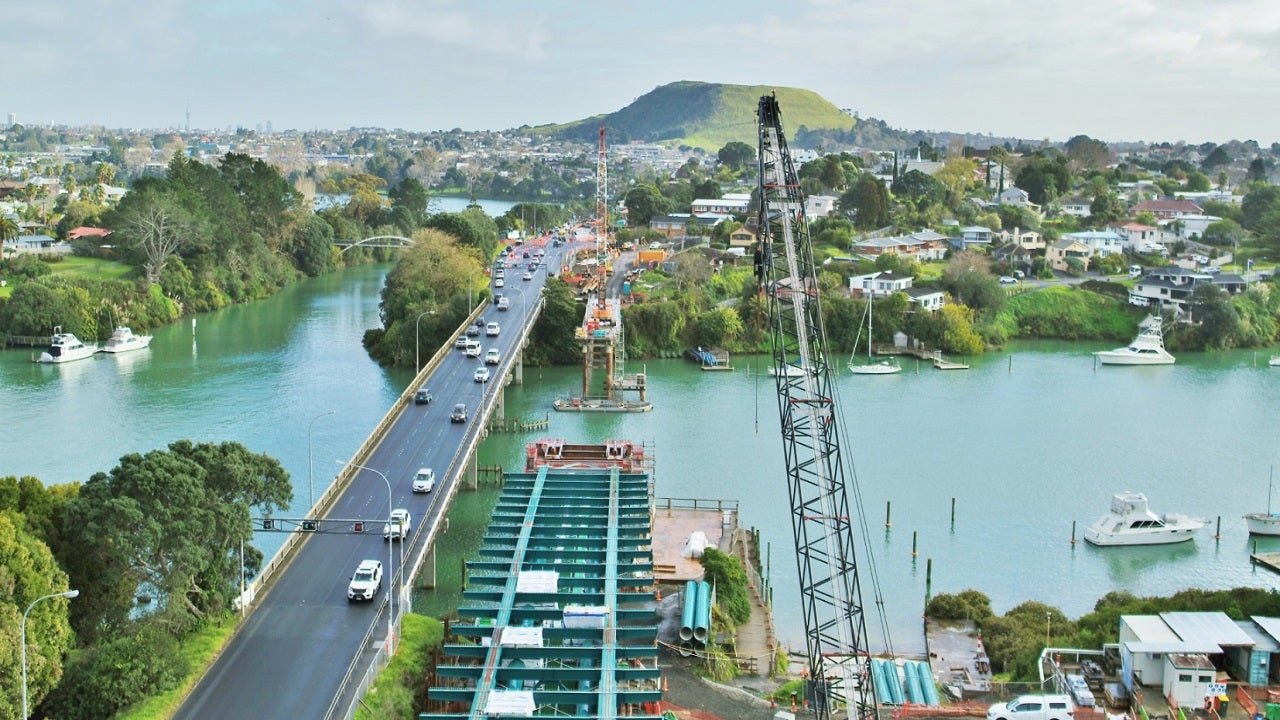
BRIDGES ON THE EGNATIA ODOS MOTORWAY By the time of its completion in 2008, the Egnatia Motorway will have 1,650 bridges and small structures along its length, totalling 40km and 20% of the total project cost. These structures will feature many different designs as there are a large variety of bridges being built: 205 bridges; 100 overbridges; 235 underpasses and 1,110 culverts. The major bridges are as follows:
Pre-stressing of these bridges is longitudinal (transverse in some cases) and support piers are generally hollow (monolithic or with bearings). Continuous decks with stable or variable structure height are being prioritised and abutments are separated from the decks with either sliding or elastomeric bearings. The majority of the bridges being built are in the Central and Eastern regions (222 and 262 respectively) although the average length of bridges is longest in the West Region at 121m for 86 bridges. The major bridges of Egnatia Odos are mainly in the West Region. HIGHWAY SAFETY AND TELEMATICS The road, tunnel and bridge safety management system was designed and overseen by DHV and included: ramp metering, express lanes, incident management, traffic monitoring, traffic control, signalling, traffic information systems, tolling systems and tunnel management. "Upon completion, the Egnatia Motorway will have 1,650 bridges and small structures along its length."
Delcan was chosen as the ITS coordinator and are providing engineering services for the planning and preliminary design of intelligent transportation systems for the deployment of traffic management, telecommunications, toll collection and motorist advisory systems. An open architecture system was developed to allow integration with the highway's existing ground transportation facilities as well as future technology upgrades and to enable the system to be refined as operational experience and traffic management needs are realised. RTMS traffic-counting stations, which include RTMS multi-zone, radar-based vehicle detectors, will provide data to assist with network planning and operational issues. EIS Electronic Integrated Systems Inc delivered and installed six RTMS traffic-counting packages on the Egnatia Motorway near Thessaloniki. In this application, the units were mounted on existing lighting poles providing detection in up to three lanes of traffic. |
![]() Expand ImageThe 680km Egnatia Motorway, when completed, will run across Northern Greece from its starting-point at Igoumenitsa, across the Prefectures of Thesprotia, Ioannina, Grevena, Kozani, Imathia, Thessaloniki, Kavala, Xanthi, Rodopi and Evros, to the village of Kipi on the Turkish border. |
![]() Expand ImageThe highway is a 24.5m-wide dual carriageway with two traffic lanes and an emergency lane in each direction. | |
![]() Expand Image49.5km of the entire Egnatia Odos will be underground in a total of 69 twin bore tunnels. Standard tunnel design along the highway provides for two traffic lanes, each 3.75m wide, with a maximum clearance of 5m. | |
![]() Expand ImageBy the time of its completion, the Egnatia Motorway will have some 1,650 bridges and small structures along its length, totalling 40km and 20% of the total project cost. | |
![]() Expand ImageAs part of the European Intercontinental Transportation Network, the Egnatia Odos motorway will also be a collector route for the Balkan and South-eastern European transport system. | |
![]() Expand ImageAn open architecture road safety management system has been developed to allow integration with the highway's existing ground transportation facilities and future technology upgrades. | |
![]() Expand ImageAs of February 2008, the Egnatia Odos motorway is nearing completion. | |
![]() Expand ImageThe Egnatia Odos motorway is one of the largest and most ambitious civil engineering projects in Europe. |